On 7 and 8 November 2026, Kozhikode became a meeting place for people connected by coffee. Visitors came from across Kerala and from Bengaluru, joining local café teams, brewers, roasters and producers for a weekend that stretched across a festival venue and several coffee spaces in the city.
At Aspin Courtyards on Beach Road, Kerala Coffee Festival brought together a programme of workshops, competitions and exhibitors. Around the same weekend, café collaborations offered more opportunities to taste international coffees, discover Kerala-grown coffee and spend time with the people preparing it.
The activities had their own hosts and identities. Together, they showed how much a coffee community can offer when people cooperate: a place to learn, a reason to travel and an opportunity to give the coffee itself closer attention.
Kerala Coffee Festival and a wider coffee weekend
Billed by its organisers as Kerala’s first-ever coffee festival, the two-day event provided a focal point for the weekend. Its published programme connected coffee education with brewing, sensory skills and the practical work of cafés and roasteries.[1]
Kozhikode was the host city, while the community gathered there reached much further. People arriving from different parts of Kerala and Bengaluru brought their own experiences, interests and ways of working with coffee.
That wider perspective is central to this story. Kerala Coffee Festival and Kerala Origins are distinct initiatives, contributing to a coffee community in which people support one another. The festival, the café collaborations and the people travelling between them formed different parts of the same weekend.
Learning to understand what is in the cup
The festival’s workshop programme offered several starting points, from an introduction to coffee to more focused sessions on brewing and drink development.
Coffee Through the Senses, scheduled for Saturday afternoon, connected green coffee and processing with roasting, aroma and flavour. Guided cupping was part of the programme, giving the session a practical focus: tasting coffees and finding language to describe their differences.[2]
On Sunday morning, Beyond the Brew listed a manual brewing masterclass with Matin Shaikh, introduced by the organisers as the Indian Brewers Cup Champion 2026. Its subjects included grind size, water chemistry, temperature, flow and brew ratios, alongside hands-on V60 preparation.[3]
The Signature Lab, with Tejas, whom the programme identified as a Coffee Board of India barista trainer, approached coffee through beverage creation. The announced session covered ingredient combinations, flavour balance, texture, presentation and guided tasting.[4]
There was also an accessible starting point for newcomers. Coffee From Zero, hosted by Abhil of Kaapi Brewing and Pour Over Lab, was a Malayalam session for beginners. Its programme covered where coffee comes from, beans and roasting, aromas and the basics of making a cup.[5]
Together, these subjects gave the weekend educational depth. Someone encountering specialty coffee for the first time could begin with a straightforward introduction. A home brewer could explore a preparation method more closely. A working barista could consider how to explain a coffee or develop a drink around it.
The Malayalam session was particularly relevant to making those conversations accessible. People should be able to ask questions about coffee in a language they are comfortable using.
Brewing and sensory skills in the spotlight
The competition programme approached coffee skill from different directions.
The Barista Championship presented by Kaapi Solutions, listed for 8 November, set a clear challenge: prepare two espressos and two milk beverages within a ten-minute performance. The announced judging format combined sensory evaluation with technical assessment.[6]
That format draws attention to several parts of a barista’s work at once. Preparation has to be organised; drinks need to be consistent; and the person serving them has to make considered decisions within a limited time.
The Aroma Master Championship focused on recognising and distinguishing aromas. Its published rounds included identifying samples, finding an odd aroma among a group and matching aromas with cards.[7]
These are useful skills to make visible. Describing a coffee can feel unfamiliar when someone first encounters specialty coffee. A programme built around smelling, comparing and identifying gives that attention a practical form.
The competitions also sat alongside learning activities, allowing the weekend to accommodate different levels of experience without expecting every visitor to approach coffee as a competitor.
Experiments, exhibitors and coffee conversations
The advertised brand line-up included Ekata Coffee Roasters, Hario India, BerryCo, Blue Tokai, Kaapi Solutions, MONIN, Hatti Kaapi and others. It brought coffee brands, equipment and beverage-related businesses into the festival’s wider programme.[1]
BerryCo’s announcements added a particularly detailed set of tasting and learning activities. At Stall A3, its programme included blind coffee-tasting challenges on both days, a coffee knowledge challenge, a Saturday session called Coffee, Unfiltered, and a Sunday roasting demonstration.[8]
Other announced experiences explored the effect of water, espresso crema, aeration and different fermentation approaches. These offered concrete questions for visitors to consider: what changes between two preparations, which differences can we notice, and how can we describe them?
That kind of focused comparison can make a coffee event useful long after it ends. A visitor can take a question home and revisit it with their own brewer. A café team can discuss how to communicate a coffee more clearly. A producer and a roaster can begin a more specific conversation about the sample in front of them.
An Omakasé collaboration with NAS
The café activities gave the weekend a different pace.
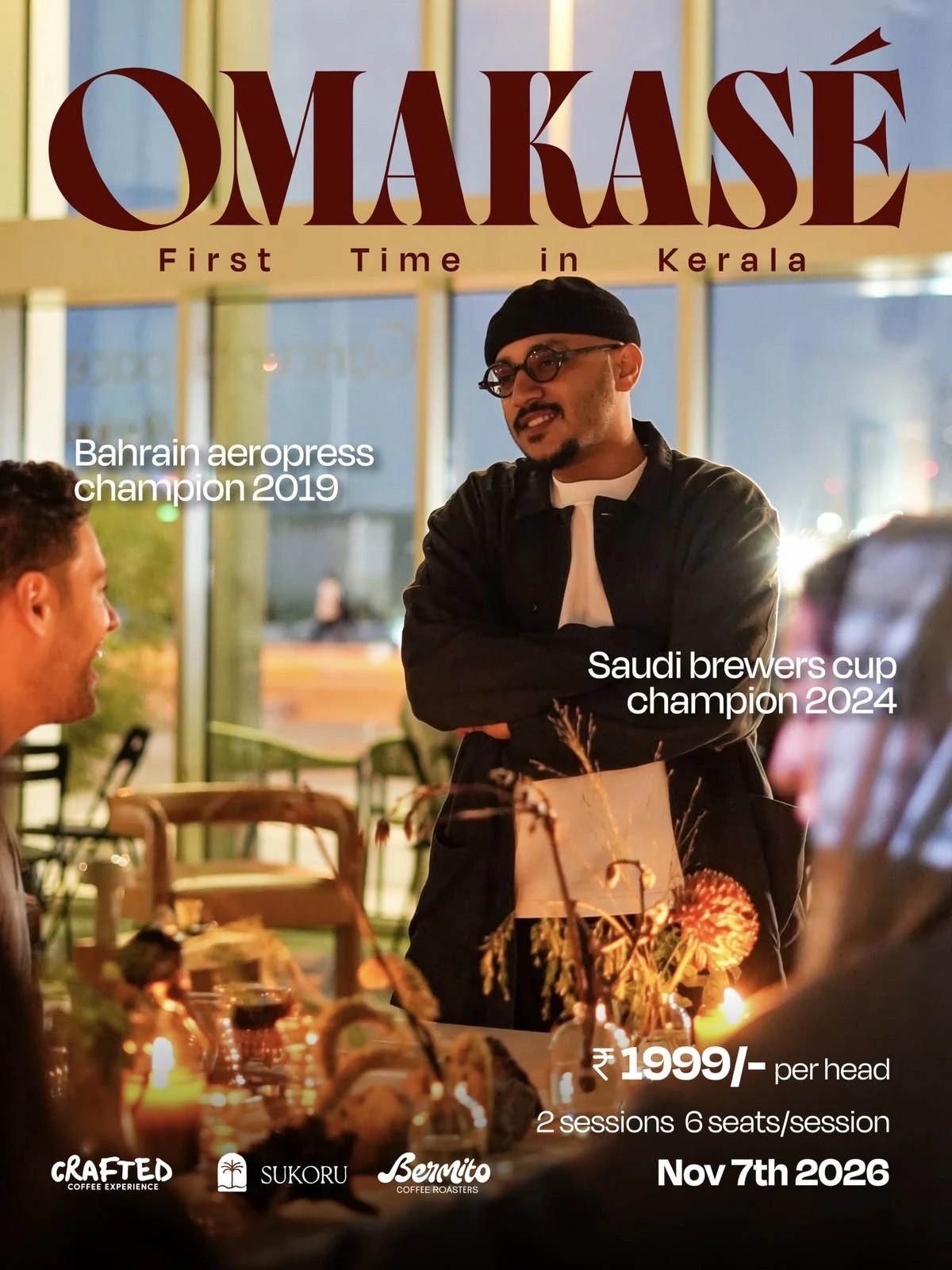
On 7 November, an Omakasé with NAS, also introduced as Naser, brought together Sukoru, Bermito Coffee Roasters and Crafted Coffee Experience. The announcement offered two sessions with six guests in each, creating a small-group format for exploring coffee.[9]
The experience featured international coffees. Within the wider weekend, that added another point of reference: an opportunity to encounter coffees from outside India alongside the growing conversation about coffees produced in Kerala.
A guided tasting allows time for attention. The brewer can introduce a coffee and its preparation, and guests can ask questions as they taste. Those exchanges help make an unfamiliar coffee more approachable.
NAS’s brewing, the coffees selected for the sessions and the work of Sukoru, Bermito and Crafted Coffee Experience came together in a collaborative tasting. Each contribution helped shape what guests encountered.
Wayanad espresso and Jaseem’s pumpkin coffee
On 8 November, the NAS × Jaseem bar takeover at Sukoru brought Kerala-grown coffee into the weekend’s café conversations.
Kerala Origins coffees, roasted by Bermito, were part of the experience. Wayanad coffee was served as espresso, while Jaseem’s special pumpkin coffee drink added a signature beverage to the experience.
The menu gave visitors two different ways to approach coffee: a Wayanad espresso and a creative drink developed by Jaseem. Together, they brought attention to both the coffee’s origin and the brewer’s contribution.
For Kerala Origins, this is a useful way to bring attention to local coffee: make it available to taste, explain where it comes from and create opportunities for people to become curious about the work behind it.
Bermito’s contribution included collaborating on the experience and roasting the Kerala Origins coffees. Its wider work in Kozhikode also includes tastings and brewing workshops, as well as helping bring Kerala producers’ coffees to cupping gatherings.[10]
The credit belongs across that chain. Producers grow and process the coffee; roasting prepares it for brewing; brewers develop and serve the drinks; and café teams provide the setting in which people encounter them. Keeping those roles visible makes the story of the cup more complete.
Other coffee spaces added to the weekend
The activity around the city included Underblu’s opening around this period, with a premium coffee selection, and Urban Hippie Coffee Roasters’ Canephora Culture cupping.
These experiences added to the range of ways people could engage with coffee. A new café introduces a setting that people can return to. A focused cupping gives a particular group of coffees time and attention.
Canephora Culture also made room for a closer conversation about the coffees presented at its tasting table. A well-documented tasting can connect what someone notices in the cup with information about the producer and the work behind that coffee.
For visitors who had travelled to Kozhikode, the activity across several venues made the trip about more than one scheduled stop. It offered different encounters with the people and coffees in the city.
Giving Kerala coffee a recognisable place
A weekend like this raises a question that continues after the events finish: how can interest in a cup become lasting recognition for the people who produced it?
For Kerala Origins, that question is central. The aim is to help more people discover Kerala specialty coffee and understand the producers behind it, while supporting practical conversations between growers, roasters and brewers.
Recognition begins with information that can be followed. A coffee’s region, producer and processing details help a drinker understand what they are tasting. Clear roasting and brewing credits acknowledge the work that brings it to the counter.
That approach matters when Kerala coffee is presented locally and when it reaches people elsewhere in India or abroad. A regional name can invite interest; an identifiable producer and a carefully presented coffee give that interest somewhere to go.
The November weekend created opportunities for those connections. Visitors could discover a coffee, brewers could exchange ideas, and café teams could introduce their work to people who had travelled from different places.
What happens next depends on continuing those conversations: returning to a producer’s coffee, sharing useful feedback, inviting another brewer to collaborate or helping a newcomer understand their first tasting.
Kerala Origins wants to help those connections grow. Producers interested in joining a future showcase or discussing their coffee can contact the team and become part of that conversation.
The weekend has ended. The work of discovering, understanding and sharing Kerala coffee continues.
Sources and reporting
Festival coverage draws on the organisers’ published programmes and brand announcements. Details of the café collaborations and visitors from across Kerala and Bengaluru come from the first-hand account shared with Kerala Origins. Programme listings describe announced activities; no competition results or attendance totals are inferred.